
Telehealth · Arizona · Colorado · Maryland · Utah
Trauma and somatic therapy for neurodivergent adults — brains wired for depth, intensity, and feeling everything fully.
About us
We chose the name because the word holds both things at once: a place to rest, and a passage through. This is meant to be both, for precisely as long as it serves you.
I kept meeting people who had already done therapy — sometimes years of it — and still felt unmet. Usually they'd been handed a protocol built for a nervous system unlike theirs: worksheets, homework, a plan written before anyone really knew them. For neurodivergent people and people carrying complex trauma, that rarely lands. I built this so the work could be shaped around the person instead.
Small on purpose. Kiesha sees clients across Arizona, Colorado, Maryland, and Utah by telehealth. RJ works with Utah clients, virtually and in person in Ogden.
Two clinicians means we can hold a caseload without rushing it, and refer to each other when that's the better fit.
Stabilisation before processing — we build resource first, and we don't skip that step because it's slow. Your neurodivergence treated as information about how you work, not a list of symptoms. And plain answers about what we're doing and why, any time you want them.
Some of this is inherited. Kiesha's mother is Mexican, and the women in her family practised curanderismo — from curar, to heal. It's a tradition that never separated the intuitive from the spiritual from the natural world, and it was simply part of how the family lived, held alongside a Western upbringing.
Some of it is studied. Somatic and parts-based work carry their own Western clinical lineages, and other traditions around non-ordinary states came from teachers and communities whose histories aren't ours to claim. We name what we've borrowed, keep our practice inside our training and licences, and stay honest about the difference between studying something and belonging to it.
Approach
Your nervous system has been holding a story — some of it in words, most of it below them. We get curious about what it's been carrying, let it set the pace, and build enough safety that it can finally set something down.
Some specifics, because clarity helps:
Tracking what your body is doing while we talk — revved up, settled, or somewhere in between. Small doses, with plenty of room. We slow down early and often.
The part of you that wants to leave and the part that wants to stay can both be right. We can work from there, with both of them in the room.
Your wiring is information, and we treat it that way. The therapy adjusts to fit you — in how sessions actually run, beyond simply naming it as a topic.
Who we see
Most people arrive carrying more than one of the things below at once. That's typical here, and it's welcome.
Started early, went on for years. Attachment injury, chronic invalidation, growing up somewhere that asked more than it gave.
Autistic, ADHD, AuDHD — diagnosed, self-identified, or four months into a research spiral at 1am. Including the grief that arrives when it clicks.
Leaving high-control religion or groups, whether last month or a decade ago. Working out what you actually think.
Affirming is the floor here. Yours to bring in as much or as little as you like.
Medical trauma, the long search to be believed, energy-limiting conditions. A body with its own agenda.
Preparation, integration, and — with RJ — support during sessions arranged through your own provider. Details below.
Practice, meaning, and the sacred — rebuilt after leaving, or built new. Belief welcome, and so is its absence.
Kink, BDSM, polyamory, and other structures — context for the work rather than the problem in it.
Psychotherapy support before, during, and after — we never provide, source, or dose any substance.
How this worksBoth of us have training and experience supporting people who choose plant medicines or psychedelics in service of their therapeutic goals. Most of that work happens on either side of the experience — preparing well beforehand, then integrating what surfaced, which is usually where the lasting change lives.
RJ can also sit with clients during ketamine- or cannabis-assisted sessions arranged through your own licensed medical provider. Those arrangements are worked out case by case, in conversation with you and your provider.
What we don't do: provide, administer, source, prescribe, or dose any substance; advise on obtaining one; or facilitate access. This work is available only where it is legal for you, under the care of a provider licensed to offer it.
Our clinicians
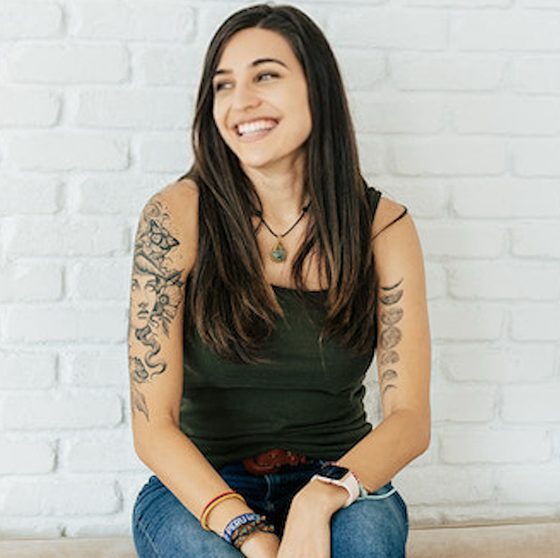
She / Her
Founder & Clinical Director · Arizona, Colorado, Maryland, Utah
I'm a trauma specialist and a fellow neurodivergent human, which means I've sat on both sides of this. Expect curiosity, warmth, and probably some humour — the work goes better when it feels like two actual people in a room.
More about KieshaShow lessI meet you where you are and we work toward where you want to go. No cookie-cutter treatment plans, no one-size-fits-all homework — healing isn't linear, and for neurodivergent minds it rarely looks the way the textbooks describe.
I draw on EMDR, Internal Family Systems, and Somatic Experiencing, and I bring in creative work when words feel too small for what you're carrying. We look at the whole picture: mental, emotional, physical, relational, and spiritual if spiritual matters to you. Whatever feels important is welcome in the room — including astrology, tarot, or energy work, if those are part of how you make meaning.
What you can count on from me: I'll tell you what we're doing and why, I'll follow your pace rather than a protocol, and I'll say plainly when something isn't working so we can try another way.
Neurodivergent, quirky, out-of-the-box thinkers — brains wired for depth, intensity, and feeling everything fully. People carrying complex trauma, the kind that started early and went on for years rather than the kind with a single date attached. Adults working with ADHD, anxiety, depression, PTSD, identity exploration, and life transitions.
Also people making sense of non-ordinary state experiences, including difficult ones. Western culture gives us almost no framework for weaving those back into ordinary life, and that's often where I'm most useful.
I grew up an Army brat, so I never quite learned the art of settling down — hence all the state licences. I travel when I can, play in D&D campaigns, sit in the sun whenever it's offered, and have watched more of the RuPaul's Drag Race franchise than is strictly defensible. Astrology, tarot, human design, and a healthy respect for perimenopausal rage.
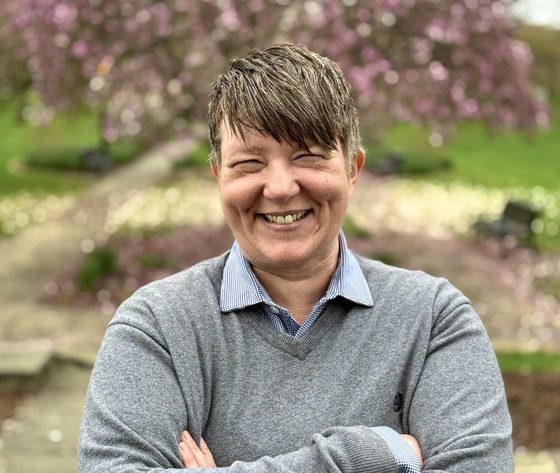
She / They
Associate Clinical Mental Health Counselor · Utah clients only
Therapy doesn't have to begin from the assumption that you need to become someone else. You may have spent a long time feeling uneasy in your own existence without fully understanding why — masking well enough, pushing through, appearing fine.
More about RJShow lessMy approach honours your strengths while gently challenging ways of being that no longer serve you. I draw from somatic and body-based counselling, expressive and creative approaches, and experiential work — because growth often happens through reconnecting with the body, imagination, values, and the parts of ourselves that learned to stay quiet in order to get by.
Sessions may include conversation, body awareness, creative exploration, practical strategies, reflection, and gentle experimentation. Always shaped around your goals rather than a predetermined idea of who you should become.
People processing experiences connected to high-demand organisations and communities — religious, political, or otherwise — and people navigating faith transitions, spiritual questions, and identity shifts. That work can hold grief, relief, anger, uncertainty, rebuilding trust in yourself, and working out what meaning looks like now.
Also neurodivergent adults, or people exploring whether they might be: ADHD, and those who experience themselves as highly sensitive, intensely feeling, creatively wired, unconventional, or worn out by trying to fit expectations that never felt natural. Alongside that, anxiety and overwhelm, burnout, chronic illness and chronic pain, grief, life transitions, and self-esteem.
Clients have described me as open-minded, pleasure-positive, calm, and curious. I welcome people across identities, relationships, and belief systems — LGBTQ+, trans and non-binary, polyamorous and ethically non-monogamous, kink-aware.
I offer preparation and integration support as part of longer-term therapy, and can sit with clients during ketamine- or cannabis-assisted sessions arranged through their own licensed medical provider. My role is presence, reflection, and integration — I don't prescribe, administer, source, direct, or advise on medication use of any kind.
Virtual sessions Tuesday and Thursday afternoons. In-person Saturdays at the Ogden Therapy Cooperative, 707 24th Street #1A, Ogden, UT 84401.
I collect art supplies and make things — usually sculpture, usually built from used or found objects. I gravitate toward anything with music in it: concerts, drum circles, ecstatic dance. I'm also on a quest for the best burrito in Ogden, and recommendations are welcome.
Currently under supervision of Kiesha Collins CMHC, LPC-S, LCPC
Getting started
First, a free 15-minute call. Bring your questions — about money, about approach, about anything you've been sitting on.
Then intake paperwork arrives through the secure portal. Fill it in across as many sittings as you like, and leave anything murky for us to do together.
Choose your clinician and request a time below.
This website is not monitored and cannot respond to emergencies. Call or text 988 (Suicide & Crisis Lifeline), text HOME to 741741, call 911, or go to your nearest emergency department.
Fees & insurance
| Service | Kiesha Collins | RJ Kirkland |
|---|---|---|
| Consultation call (15 min) | Free | Free |
| Intake / diagnostic evaluation | $200 | $150 |
| Individual session (60 min) | $175 | $130 |
| Individual session (90 min) | $250 | $185 |
Insurance. Kiesha is in network with most major plans through Headway — check your benefits in about a minute. RJ accepts Select Health for Utah clients.
Sliding scale. A few reduced-fee places are held at any time. Ask on the consult call.
Good Faith Estimate. If you're uninsured or paying out of pocket, you have the right to a written estimate of what your care will cost. Just ask.
For clinicians
Kiesha Collins is a board-approved clinical supervisor in Arizona and Utah, providing supervision toward independent licensure as well as consultation for licensed clinicians.
Oriented toward complex trauma, neurodivergent clients, and the parts of the work that live outside a manual — documentation that holds up, scope questions, and your own nervous system in the room.
Licensure & disclosures
What matters is where you are during the session, not where you live on paper. Travelling out of state? Tell us beforehand and we'll sort it out.
| Clinician | Licensed to see clients located in |
|---|---|
| Kiesha Collins, MA, LPC-S, LCPC, CMHC | Arizona · Colorado · Maryland · Utah |
| RJ Kirkland, ACMHC | Utah |
Sojourn Integration + Therapy LLC serves clients without regard to race, ethnicity, national origin, immigration or documentation status, religion or absence of religion, disability, body size, sexual orientation, gender identity or expression, relationship structure, or income level. We do not report on, ask about, or disclose immigration status.
Client resources
Crisis numbers, practice paperwork, and reading clients have found useful. Nothing here replaces working with someone — it sits alongside it.
988 — Suicide & Crisis Lifeline. Call or text, 24/7.
Text HOME to 741741 — Crisis Text Line.
911 or your nearest emergency department for a medical emergency.
Education and integration only. Nothing listed here provides, sources, recommends, or doses any substance, and none of it should be read as guidance on obtaining one. See our approach to preparation and integration work above.
Shared as general education, not as recommendations for you specifically. What helps one nervous system can unsettle another — if something lands hard, bring it to session.
Bring whatever you have. We'll work out the rest together.
Contact
Send a few sentences whenever you're ready. We reply within two business days.
Kiesha@mysojourntherapy.com
Phone
801-784-8238
Existing clients
Response time
Within two business days
Please call or text 988, or text HOME to 741741 — both are there around the clock. For a medical emergency, 911 or your nearest emergency department. Messages here aren't seen straight away.
Tell us as much or as little as you like — a couple of sentences is plenty, and there'll be room for the whole story later.